


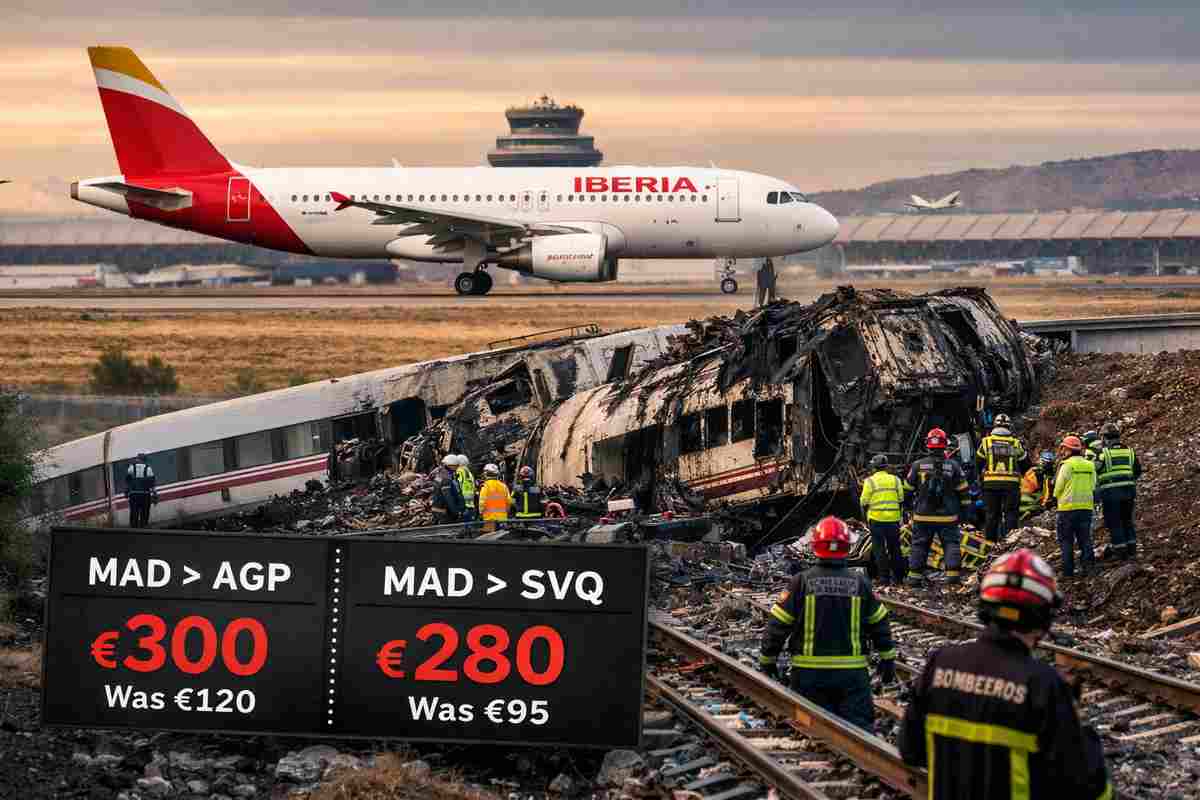
Fare increases reported on Madrid–Málaga and Madrid–Seville routes
MADRID — Iberia (IB) is facing public scrutiny after passengers reported sharp fare increases on flights from Madrid Barajas Airport (MAD) to Málaga Airport (AGP) and Seville Airport (SVQ) following a deadly high-speed train crash in southern Spain.
With high-speed rail services suspended across Andalusia, thousands of travelers were forced to seek alternative transportation, putting immediate pressure on domestic air routes. Iberia moved to increase flight capacity on key corridors, but automated pricing shifts triggered accusations of price gouging before the airline stepped in to adjust fares manually.
Deadly crash forces shutdown of high-speed rail services
At least 39 people were killed on Sunday night after a high-speed train derailed near Adamuz in the Córdoba province. The incident involved an Iryo-operated train and a Renfe service traveling in the opposite direction, resulting in multiple derailments and widespread casualties.
In response, authorities halted all high-speed rail services linking Madrid with southern cities, including Córdoba, Málaga, Seville, Granada, Cádiz, and Algeciras. The shutdown disrupted travel plans for thousands of passengers and created a sudden spike in demand for domestic flights, particularly on routes typically served by frequent rail connections.
According to PYOK, the shift from rail to air caused demand to surge within hours as stranded passengers looked for immediate alternatives.
Iberia adds flights and seats to meet emergency demand
To handle the surge, Iberia deployed additional flights, including eight extra daily services between Madrid and Málaga. The airline also increased capacity through its subsidiary Iberia Express to accommodate more passengers during the rail shutdown.
The expanded schedule was aimed at easing congestion and providing travelers with additional options while rail authorities worked to stabilize the situation. Iberia’s capacity additions were among the most visible airline responses to the sudden interruption in Spain’s transport network.
Passengers accuse airline of price gouging amid crisis
Despite the added seats, travelers reported fares rising sharply compared to typical pricing on the same routes. Some passengers claimed prices climbed as high as 200 percent over pre-crash levels, prompting widespread criticism online.
Social media posts accused Iberia of exploiting a national emergency, with some travelers reporting one-way tickets priced as high as €300. The spike drew attention because the demand increase was tied directly to a major public safety incident that left many travelers with few alternatives.
Iberia issues statement and adjusts fares
Iberia issued a public statement expressing condolences to the victims and wishing a swift recovery to those injured. The airline did not initially address pricing complaints but later took manual control of its inventory system following public backlash.
By Tuesday, one-way fares from Madrid to Málaga dropped to €136, with prices falling further to €108 on Wednesday and Thursday. Return direction fares were also reduced, settling near €100 for the remainder of the week.
The fare changes suggested Iberia acted to stabilize prices and bring them closer to normal levels as criticism intensified and passenger frustration grew.
Automated pricing systems blamed for sudden surge
The short-lived price spike was linked to Iberia’s automated revenue management system. These systems adjust fares in real time based on demand signals, often without direct human intervention during sudden disruptions.
In fast-moving situations such as major transport shutdowns, automated systems can push prices higher almost instantly as available seats are booked. Once the issue became public, manual intervention helped bring fares back in line with typical rail ticket prices on the same routes, easing passenger concerns and stabilizing bookings.
Bottom line: capacity expansion helps, but pricing backlash remains
Iberia’s rapid response helped expand travel options after Spain’s rail network disruption, but the airline faced backlash when automated fare increases resulted in unusually high ticket prices.
Manual pricing controls have since restored more reasonable fare levels across affected routes, but the incident has renewed debate over airline pricing practices during emergencies and the role of automated systems in shaping consumer costs during crises.
