


Severe Weather Triggers Operational Strain at O’Hare
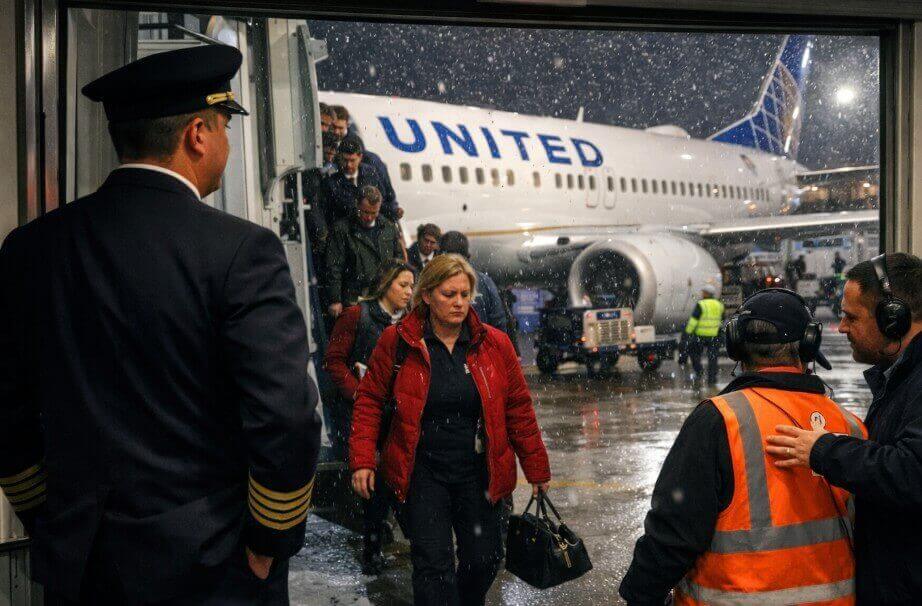
CHICAGO — A United Airlines pilot at Chicago O’Hare International Airport (ORD) halted a late-night departure during the Christmas travel rush after refusing to operate the flight with an exhausted cabin crew, a decision that forced passengers to deplane and wait for a replacement team.
The incident unfolded amid severe winter weather that swept across the Midwest and Northeast, disrupting airline operations during one of the busiest travel periods of the year. Snow, ice, and freezing temperatures caused widespread delays and cancellations, placing intense pressure on airline schedules and frontline crews.
United Airlines, which operates one of its largest hubs at O’Hare, faced mounting operational challenges as aircraft and personnel fell out of position throughout the day. By late evening, delays continued to cascade across the network.
A Short Flight Turns Into a Long Night
Among the affected passengers was Becky Schmooke, who was traveling with her family on what was scheduled to be a 40-minute United Airlines flight home to Iowa. After hours of delays that stretched from the afternoon into late evening, Schmooke and other passengers finally boarded a United Boeing 737 close to midnight.
As the aircraft prepared to depart, the flight attendants reached the end of their federally mandated duty time limits and had effectively “timed out.” While duty limits set clear scheduling boundaries, irregular operations often place airlines in difficult positions as they attempt to complete flights already boarded.
“Duty limits are firm. When time is up, it’s up,” Schmooke wrote in a Facebook post that later went viral.
“But being done by regulation does not mean you can simply walk away once a plane is boarded and full of people.”
Ground Pressure Meets the Captain’s Decision
According to Schmooke, ground staff asked the flight attendants to remain onboard while a replacement crew was located. The request placed the cabin crew in a difficult position, balancing operational pressure against fatigue and safety considerations.
The captain, observing the condition of his flight attendants, refused to allow the situation to continue.
“The captain…explained to someone outside of my line of sight that the passengers would need to deplane and wait for a new crew,” Schmooke wrote. “There was pushback.”
“He explained it again, calmly. When that didn’t change anything, his tone shifted. Clear. Final.”
“He made it unmistakably clear that his flight attendants were done for the night and he was not going to keep the crew stuck on the plane while logistics were debated.”
The decision required all passengers to exit the aircraft and return to the terminal, adding additional delay after an already exhausting day of travel.
FAA Rules and Fatigue Risk
Under Federal Aviation Administration (FAA) regulations, flight attendants on domestic flights may be scheduled for duty periods of up to 14 hours, depending on crew size and report time. These limits are designed as planning parameters, not guarantees of safe performance under all conditions.
In daily operations, airlines may request voluntary extensions from crews when delays occur. However, crews must assess their own fatigue levels, and pilots retain authority over whether a flight operates safely.
Fatigue is a recognized risk factor in aviation, capable of impairing judgment, reaction time, and emergency response. In this case, the captain determined that his crew had exceeded safe operational limits.
According to PYOK, the pilot maintained his position despite resistance, prioritizing crew well-being over schedule recovery.
Passenger Response and a Lesson in Leadership
Rather than reacting with frustration, Schmooke said she thanked the captain directly for standing up for his team as she deplaned.
“Leadership is often talked about in terms of efficiency and outcomes,” she wrote. “But leadership shows itself just as clearly in what someone refuses to optimize away.”
“Sometimes the job is to stand in the way. Some decisions are inconvenient. Some are costly.”
Her post gained widespread attention online, resonating with readers who viewed the incident as a clear example of accountability under pressure. The captain’s decision delayed passengers and extended his own journey home, but reinforced a core principle of aviation safety.
As airlines continue to navigate peak travel disruptions, the episode highlights the delicate balance between operational efficiency and human limits — and the leadership required when the two collide.
