


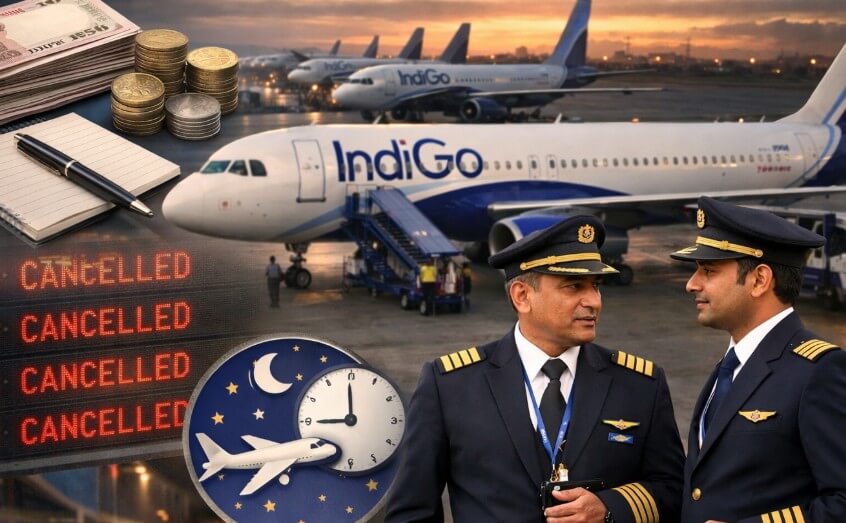
IndiGo, India’s largest low-cost airline, will implement higher pilot allowances across several duty categories starting Jan. 1, 2026, as it seeks to stabilize operations following a major disruption triggered by stricter flight duty regulations in December. The move comes after a weeklong crisis that saw thousands of flights canceled nationwide, highlighting the growing tension between regulatory compliance and high-frequency airline operations.
Operated by InterGlobe Aviation Ltd., IndiGo said the revised compensation framework is designed to address pilot concerns, improve crew availability, and reinforce operational resilience. While much of the airline’s network has since been restored, the allowance hike marks a structural response to the challenges exposed by the December breakdown.
December Crisis Exposes Operational Strain
In early December 2025, IndiGo experienced one of the most significant operational failures in its history. More than 5,000 flights were canceled over the course of a single week, including about 1,600 services on Dec. 5 alone. The cancellations stranded thousands of passengers across major Indian airports and disrupted holiday travel plans.
The breakdown followed the implementation of tighter Flight Duty Time Limitation rules that expanded mandatory weekly rest periods for pilots from 36 to 48 hours. Regulators also imposed stricter caps on night operations, reducing the number of permitted night landings and limiting total flight hours during overnight duties.
These changes disproportionately affected IndiGo, whose business model relies on high aircraft utilization and dense late-night and early-morning schedules. With fewer pilots legally available to operate flights, the airline was forced into large-scale cancellations to remain compliant with safety rules.
Higher Domestic Layover and Deadhead Pay
As part of the revised allowance structure, IndiGo has increased domestic layover payments for both captains and first officers. Captains will now receive ₹3,000 for domestic layovers lasting between 10 and 24 hours, while first officers will earn ₹1,500. For layovers extending beyond 24 hours, pilots will be paid higher hourly rates to reflect the extended time away from home base.
Deadhead allowances—paid when pilots travel as passengers to position for duty—have also been revised upward. IndiGo continues to calculate this compensation on a per scheduled block-hour basis, with captains now earning ₹4,000 per block hour and first officers ₹2,000.
The adjustment addresses long-standing concerns among pilots about unpaid or underpaid positioning time, particularly as network complexity and crew repositioning requirements have increased.
New Night Flying and Duty-Based Payments
IndiGo has overhauled its night flying compensation by shifting to a fixed hourly structure. Captains will earn ₹2,000 per hour and first officers ₹1,000 per hour for flights operated between midnight and 6 a.m. The change replaces an earlier multiplier-based system and is intended to better align pay with the physical strain of overnight operations.
The airline has also introduced a tailswap allowance for the first time. Pilots will now receive a flat payment when required to switch aircraft during the same duty period—an increasingly common scenario in tightly scheduled operations. Captains will be paid ₹1,500 per tailswap, while first officers will receive ₹750.
In addition, domestic transit allowances have been revised. Instead of a flat meal payment, pilots will now be compensated hourly for ground halts exceeding 90 minutes during a duty period. Captains will earn ₹1,000 per hour and first officers ₹500 per hour, with hotel accommodation provided if delays exceed four hours.
Strategic Recalibration After Disruption
IndiGo has not made changes to its international transit allowance policy, noting that the revised domestic framework is intended to fairly compensate pilots for idle time at airports and improve overall duty satisfaction.
The allowance increases signal a broader recalibration following December’s crisis, which exposed structural pressure points in IndiGo’s operating model. By improving compensation for demanding and fatigue-intensive duties, the airline aims to retain pilot goodwill while aligning regulatory compliance with operational stability.
Investor reaction has been measured. InterGlobe Aviation shares closed marginally higher after the announcement, even as broader equity markets declined, suggesting confidence that the airline is taking corrective steps without materially impacting its cost discipline.
As India’s aviation sector continues to grow under tighter safety oversight, IndiGo’s response may serve as a benchmark for how carriers balance regulatory change, workforce management, and operational reliability.
