


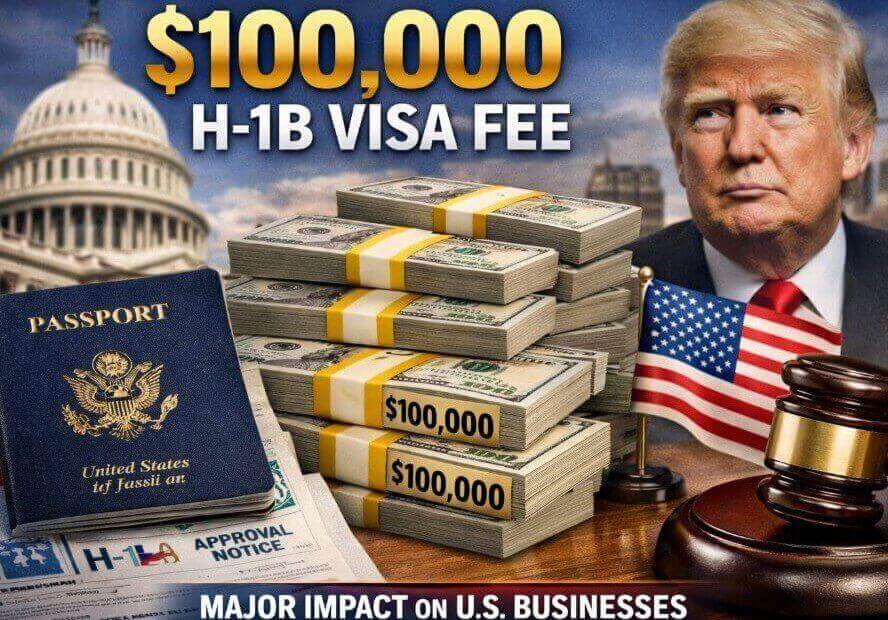
Washington Court Ruling Reshapes Skilled Immigration Costs
A federal court ruling in Washington, D.C. has cleared the way for a dramatic increase in the cost of hiring skilled foreign workers, allowing President Donald Trump’s administration to proceed with a $100,000 fee on new H-1B visas. The decision marks a significant shift in U.S. immigration policy and has wide-ranging implications for American businesses that depend on global talent.
The ruling came after a closely watched legal challenge brought by the U.S. Chamber of Commerce, which sought to block the unprecedented fee. With the court rejecting those arguments, employers across industries now face a potential six-figure cost for sponsoring highly skilled foreign professionals.
Judge Upholds Executive Authority
The case was heard in U.S. District Court in Washington, where Judge Beryl Howell dismissed the lawsuit filed by the Chamber of Commerce, the country’s largest business lobbying organization. The court ruled that the president acted within broad legal authority to regulate immigration through executive action.
Judge Howell concluded that disagreements over the economic or political wisdom of the policy were outside the court’s role. As long as the policy fits within existing legal boundaries, the judiciary must uphold it. The decision reinforces executive discretion in immigration matters, particularly when policies are framed as part of broader national objectives.
The White House did not issue an immediate public response following the ruling.
Sharp Increase From Previous Visa Costs
The H-1B visa program allows U.S. employers to hire foreign workers in specialty occupations such as engineering, aviation systems, software development, and medical research. Each year, 65,000 standard visas are issued, along with an additional 20,000 reserved for applicants holding advanced degrees, reported The Hindu.
Previously, total H-1B-related fees typically ranged between $2,000 and $5,000, depending on employer size and filing type. The new $100,000 fee represents a dramatic escalation and places the U.S. among the most expensive destinations in the world for employer-sponsored skilled visas.
For businesses that rely heavily on specialized international talent, the cost increase could fundamentally alter hiring and investment decisions.
Business Groups Warn of Economic Impact
Business organizations reacted with concern following the ruling. The Chamber of Commerce warned that the new fee could strain employers that depend on H-1B workers, particularly small and medium-sized companies with limited resources.
Business leaders argued that the fee may force companies to choose between absorbing higher labor expenses or reducing hiring altogether. Hospitals, research institutions, and service providers were cited as sectors likely to feel the impact most acutely, given their reliance on specialized professionals who are often in short supply domestically.
Industries tied to global mobility—including airlines, aircraft manufacturers, airport technology providers, and advanced manufacturing firms—are also expected to reassess workforce planning. Some companies may shift hiring overseas or delay expansion plans in response to the added costs.
Legal Challenges Continue
Despite the setback, the Chamber of Commerce signaled it is reviewing further legal options. The organization has maintained that the policy undermines U.S. competitiveness and could drive talent to other countries with more accessible immigration systems.
In addition, other lawsuits remain active. Democratic-led states, along with coalitions of employers, nonprofits, and religious organizations, continue to challenge various aspects of the administration’s immigration policies. While the current ruling strengthens the administration’s position, it does not end the broader legal debate.
Bottom Line for U.S. Employers
The federal court’s decision clears the path for one of the most expensive skilled-worker visa fees in U.S. history. While additional legal challenges are still underway, the ruling underscores the extent of executive power over immigration policy and introduces significant cost considerations for employers dependent on global talent.
For many American businesses, the decision represents a turning point that may reshape hiring strategies, workforce composition, and long-term competitiveness in an increasingly global economy.
