


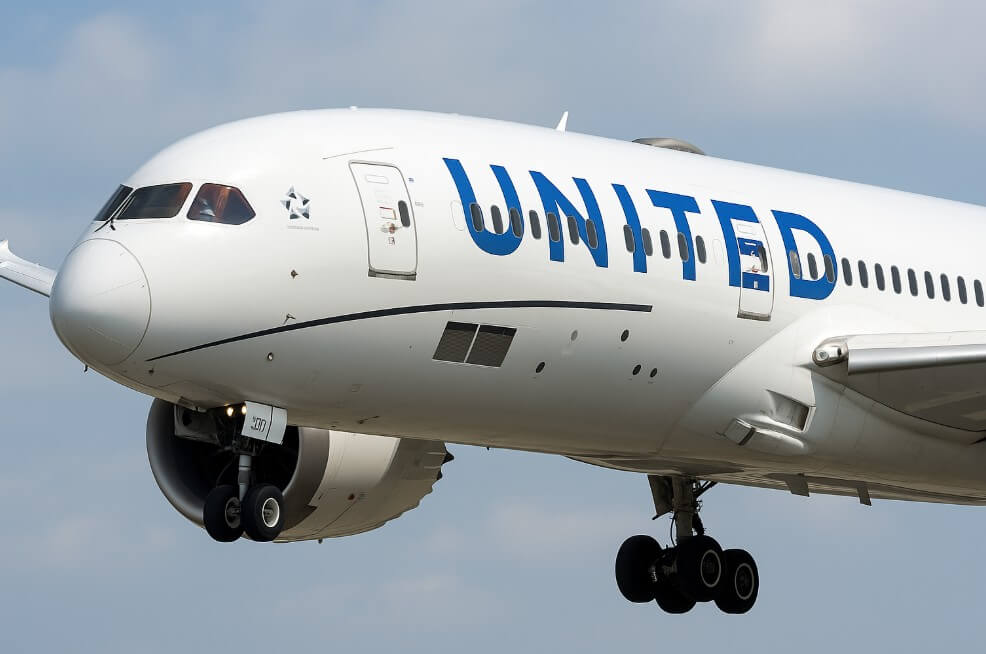
CHICAGO — United Airlines has postponed the activation of its new secondary flight deck barriers until early 2026, citing the need for additional internal coordination and cross-department training before the security devices are fully implemented.
The delay affects United’s fleet operating out of major hubs such as Chicago O’Hare International Airport (ORD), where many of the carrier’s newest Boeing and Airbus aircraft are based. While some aircraft are already being delivered with pre-installed barriers, the airline said operational use will not begin until all work groups have completed training and safety procedures are synchronized across departments.
The company’s updated timeline places United behind Southwest Airlines, which has already begun deploying the FAA-mandated devices on its Boeing 737 fleet at Dallas Love Field (DAL).
Security Upgrades Still in Progress
United confirmed that the secondary barriers—retractable gates designed to secure the cockpit during in-flight door openings—will remain inactive for now. The devices are intended to act as an additional physical deterrent to unauthorized entry when pilots leave the flight deck, reinforcing post-9/11 security protocols.
According to a company memo shared with employees and reported by Live and Let’s Fly, “although flight attendants have completed training, other operational groups have yet to finalize their preparation.” The airline emphasized that the delay “ensures consistent safety procedures across departments.”
Until the rollout is complete, flight crews will continue using existing manual safeguards such as positioning galley carts across the aisle whenever a pilot exits the cockpit. The memo also reminded employees that they are “not to deploy barrier Types 2 and 3 installed on select Boeing 737, Boeing 787, and Airbus A321neo aircraft until official clearance is given.”
Federal Requirements and Industry Context
The Federal Aviation Administration (FAA) first mandated secondary cockpit barriers in 2018 as a means of enhancing protection for pilots during brief moments when the cockpit door is unlocked. The devices became a regulatory priority after security experts highlighted potential vulnerabilities during routine in-flight movements.
Implementation across U.S. airlines has been slow, hindered by design standardization, manufacturing delays, and the need for coordination among multiple industry stakeholders. The FAA has set July 2026 as the deadline for all new commercial aircraft to include the barriers at the time of manufacture.
Southwest Airlines became one of the first major carriers to comply, incorporating the devices into its newly delivered Boeing 737 aircraft earlier this year. Other U.S. airlines are now progressing at different stages of adoption as delivery schedules, training cycles, and retrofitting plans vary widely across fleets.
United’s Implementation Strategy
United Airlines has begun receiving new aircraft equipped with factory-installed barriers and has announced plans to retrofit certain existing models to meet the requirement. The company said its decision to delay operational use reflects its emphasis on comprehensive preparation rather than rapid deployment.
“Pilots and flight attendants have already undergone operational training,” the internal memo noted, adding that United “aims to complete system-wide coordination involving maintenance and security personnel before enabling the devices.”
The phased approach, according to the airline, is intended to prevent inconsistencies in safety procedures during critical in-flight operations. By aligning protocols across all departments—from pilots to ground security teams—United hopes to ensure seamless integration once the barriers become active.
This methodical rollout mirrors the company’s broader emphasis on compliance, safety, and operational readiness as it continues expanding its fleet with new Boeing and Airbus aircraft models.
Looking Ahead
The final implementation is scheduled for early 2026, positioning United among the last major U.S. carriers to bring the new barriers online. While the postponement extends the timeline slightly, industry observers say the move underscores United’s effort to balance security innovation with rigorous training requirements.
“With the final implementation scheduled for 2026, United Airlines joins the broader industry effort to enhance cockpit security through standardized, FAA-approved mechanisms,” the company stated. “While the move delays the rollout slightly, it reinforces the carrier’s commitment to ensuring every team member is fully trained before new safety measures go live.”
As the FAA’s compliance deadline approaches, attention will likely focus on how quickly U.S. airlines can complete retrofits and harmonize procedures across their fleets. For now, United’s decision reflects a cautious but deliberate strategy—prioritizing safety consistency over speed as aviation security standards continue to evolve.
