


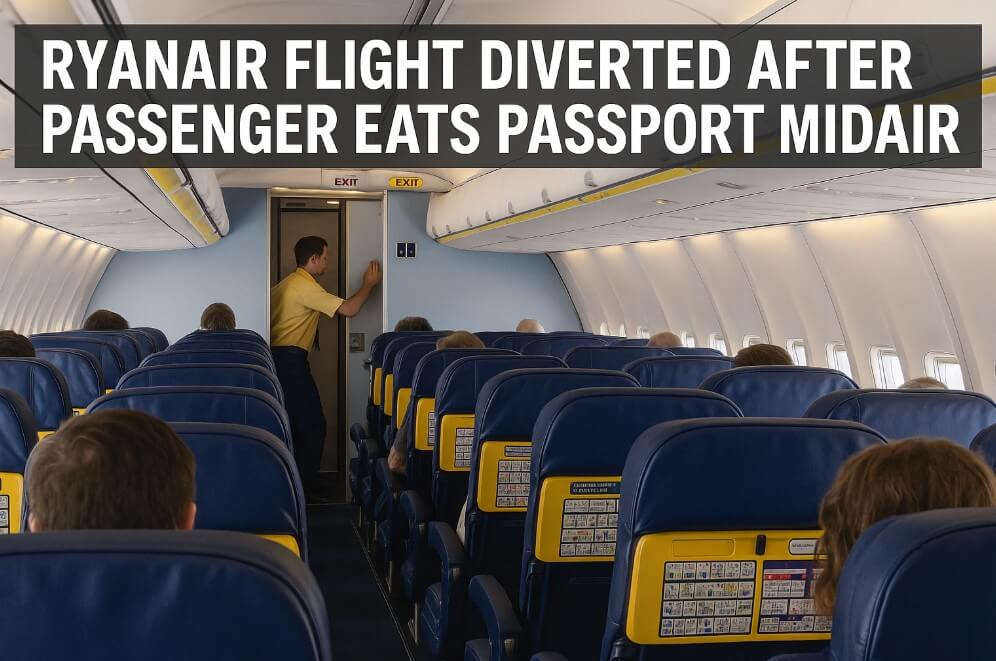
VIENNA — A Ryanair flight traveling from Milan to London was forced to divert after a passenger tore up and ate parts of their passport, creating a bizarre and disruptive incident that raised safety concerns and prompted an emergency landing in Paris.
The flight, which departed Milan Malpensa Airport en route to London Stansted, carried a mix of holidaymakers and business travelers when the disturbance unfolded in the cabin. According to airline staff and witnesses, the passenger not only chewed and swallowed portions of their travel document but also attempted to dispose of the remains in the aircraft’s lavatory.
Eyewitness Accounts
Fellow passengers described a sudden shift in the atmosphere as the unusual behavior became apparent.
“Staff were notified and went to see what was going on at the front of the plane. Suddenly the whole mood changed – no one on board knew what was going on, these people were acting weird,” one eyewitness recalled.
Cabin crew quickly followed protocol, notifying the pilots and containing the situation. As the behavior escalated, concerns grew over the passenger’s state of mind and the potential threat posed to the safety of the flight.
Crew Response and Diversion
The crew’s decision-making was later praised by both passengers and airline officials. Trained to handle disruptive behavior of any kind, Ryanair staff attempted to de-escalate the situation before opting to divert.
According to The Sun, “A flight attendant is said to have then knocked on the toilet door and attempted to convince the passenger not to flush his passport. A ‘blunt’ announcement was made about what was going on and eventually the flight was diverted to Paris.”
Once the plane landed at Charles de Gaulle Airport, French authorities boarded and escorted the individual off the aircraft. The rest of the passengers were transferred to an alternative service, continuing their journey to London with minimal further disruption.
Safety and Regulatory Concerns
A Ryanair spokesperson later confirmed that the crew acted “swiftly and appropriately, prioritizing safety above all else.” One passenger described the ordeal as “the most terrifying 15 minutes of my life.”
While diversions due to unruly passengers are not unheard of in European aviation, this case stood out both for its unusual nature and its implications. The act of consuming and destroying a passport not only created confusion and panic onboard but also breached European Union regulations, which require travelers to carry valid documents when crossing borders.
Industry experts noted that such incidents highlight the challenges airlines face in balancing safety, regulatory compliance, and passenger welfare. Mental health concerns, unpredictable behavior, and security protocols often intersect in ways that demand quick, decisive action from airline crews.
Broader Context
European carriers, including Ryanair, occasionally report disruptive incidents that force diversions. Common cases include passengers refusing to follow instructions, intoxication, or conflicts onboard. However, the destruction and ingestion of a passport marks an unusual and particularly disruptive scenario.
For airlines, even minor incidents can translate into significant costs, including fuel for diversion, airport handling fees, and compensation to inconvenienced travelers. Aviation analysts suggest that unusual cases like this underscore the importance of continued crew training and clear communication between airlines and regulatory authorities.
Bottom Line
The midair incident reflects the unpredictable nature of passenger behavior and the operational challenges it creates for carriers. While no injuries were reported and safety was maintained, the episode stands out as an extraordinary example of disruption in commercial aviation.
As the European travel sector continues to rebound post-pandemic, carriers remain under pressure to ensure smooth operations despite occasional passenger misconduct. The Ryanair passport incident serves as a reminder that even the most unusual behavior can carry serious safety and regulatory implications.
