


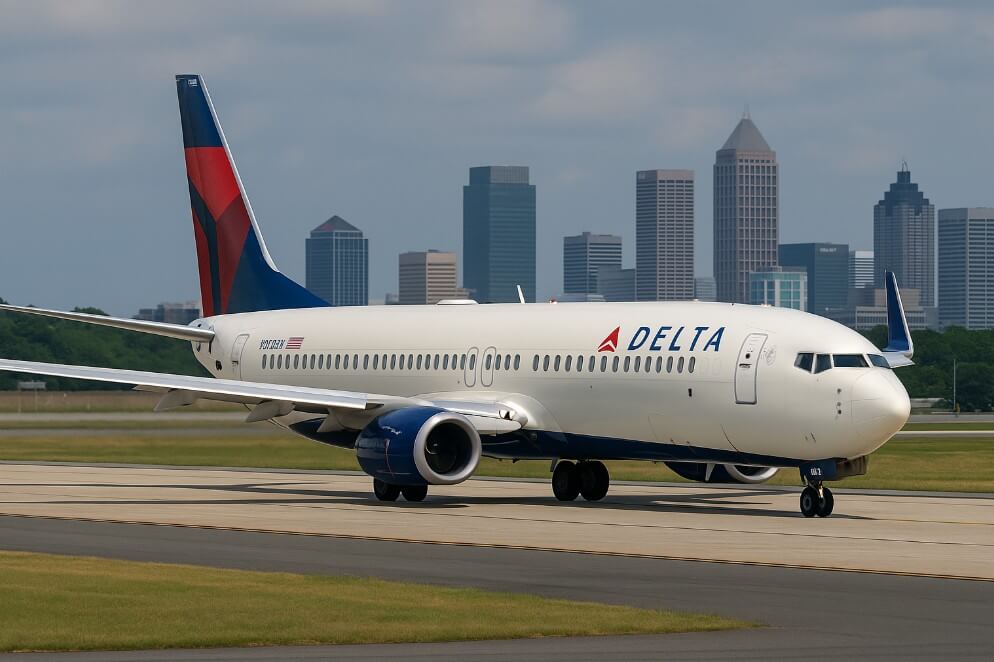
ATLANTA — A Delta Air Lines flight bound for Sacramento made a precautionary return to Atlanta Sunday evening after pilots reported an engine issue shortly after takeoff, the airline confirmed.
Delta flight DL682, operated by a Boeing 737-900ER, departed Hartsfield-Jackson Atlanta International Airport at 9:12 p.m. local time on September 21. The scheduled service to Sacramento International Airport was proceeding normally until flight crew detected sparks coming from the aircraft’s left-hand engine during climb.
According to flight data, the jet had reached an altitude of 26,000 feet before the departure procedure was cut short. The crew opted to halt the climb and initiate a direct return to Atlanta.
The aircraft landed safely on runway 09L approximately 45 minutes after departure. No injuries were reported among passengers or crew.
Delta dispatched a replacement aircraft to continue the service to Sacramento following the incident. “The safety of our customers and crew is always Delta’s top priority, and our teams worked quickly to ensure travelers reached their destination with minimal disruption,” a Delta spokesperson said.
Aircraft Details
The aircraft involved in the return, tail number N830DN, is a 10.9-year-old Boeing 737-900ER. Records show the plane has been in service with Delta since its delivery from Boeing in November 2014. The 737-900ER, part of the Next Generation 737 family, is one of the largest narrow-body aircraft in Delta’s domestic fleet and is typically deployed on high-capacity routes such as cross-country services.
Timeline of Events
Flight tracking data indicates DL682 departed on time from Atlanta’s runway 08R at 9:12 p.m. The aircraft initially set course for California before the flight crew reported the left-hand engine anomaly. Within minutes, air traffic control cleared the aircraft to return, and pilots guided the jet back to Hartsfield-Jackson.
The unscheduled return was completed without incident, underscoring the training protocols followed by Delta crews in the event of mechanical concerns. Engine malfunctions are rare but not unprecedented in commercial aviation, and airlines generally treat any sign of irregular performance—such as sparks or abnormal vibrations—as grounds for precautionary measures.
Passenger Impact
While the incident caused delays for travelers on the Atlanta-to-Sacramento route, Delta arranged for an alternate aircraft to operate the flight. Passengers were transferred to the replacement jet, which resumed the journey later in the evening. The airline did not immediately disclose the number of customers affected by the delay.
Broader Context
Delta, the world’s second-largest carrier by fleet size, operates more than 200 Boeing 737 aircraft across its domestic and international network. The 737-900ER variant, with seating capacity for more than 180 passengers, is widely used for medium-haul flights.
Industry analysts note that while in-flight turnbacks can be disruptive, they are a sign of the safety systems working as intended. “When crews detect a possible engine issue, the safest decision is always to return to the departure airport, where maintenance teams and emergency response crews are immediately available,” said aviation safety consultant Mark Ellis.
The Federal Aviation Administration typically reviews precautionary returns involving U.S. carriers, though no official investigation has yet been announced regarding Sunday’s incident.
For Delta, the quick swap of aircraft to continue the Sacramento service reflects the operational flexibility of its hub-and-spoke system at Atlanta, where spare aircraft are often available.
Conclusion
Sunday night’s event highlights the operational challenges airlines face in maintaining tight schedules while prioritizing safety. In this case, the quick actions of Delta’s crew and support teams allowed for a safe outcome and a relatively limited disruption to passengers.
