


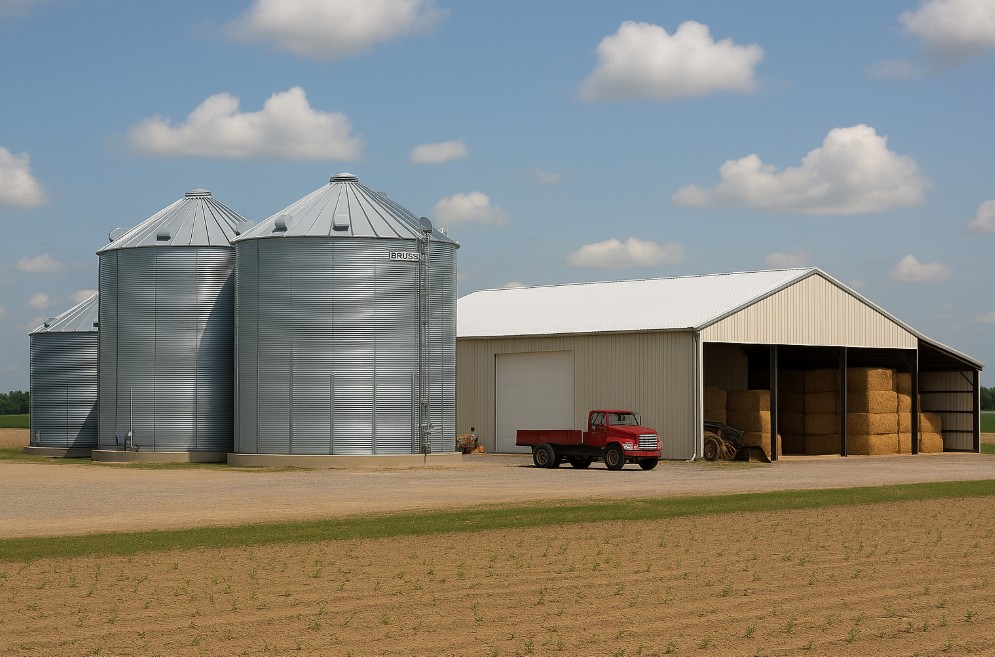
The U.S. Department of Agriculture’s Farm Service Agency (FSA) is marking a milestone this year as its Farm Storage Facility Loan Program (FSFL) celebrates 25 years of helping farmers expand and modernize storage capacity. Since its creation in May 2000, the program has become a cornerstone for family-owned farms across the country seeking affordable financing to manage the commodities they produce.
For a quarter century, FSFL has offered low-interest loans to agricultural producers, allowing them to build or upgrade storage facilities and purchase essential handling equipment. What began as a targeted response to grain storage shortages has grown into a wide-ranging program that supports diverse agricultural operations, from traditional crop farmers to livestock and specialty producers.
“Since the program’s inception, more than 40,000 loans have been issued for on-farm storage, increasing storage capacity by one billion bushels,” the agency said in its announcement. While grain storage remains the most common use, eligibility has steadily expanded. Farmers can now secure financing for hay barns, bulk tanks, cold storage facilities, and even portable options, in addition to equipment like drying systems, skid steers, and handling trucks.
Expanding Eligibility and Commodities
The FSFL program’s reach has broadened dramatically over time. Eligible commodities now span a wide range of agricultural products including grains, oilseeds, peanuts, pulse crops, hay, hemp, honey, renewable biomass, fruits and vegetables, floriculture, hops, seed cotton, wool, maple sap, maple syrup, dairy products, eggs, unprocessed meat and poultry, rye, and aquaculture.
Recent updates have further diversified the program’s scope. Controlled atmosphere storage facilities were added as eligible investments, and bison meat was included in the list of commodities covered. This expanded eligibility reflects USDA’s effort to adapt to changing agricultural practices and markets, ensuring that producers of all sizes and specialties can benefit.
Financing Options for Farms of All Sizes
The program is particularly designed to serve small and mid-sized farms as well as beginning farmers. Loan terms range from three to 12 years, with maximum amounts set at $500,000 for storage facilities and $100,000 for storage and handling trucks.
In 2016, USDA introduced a new financing option within FSFL: the microloan. Targeted at operations needing smaller loans, microloans cover balances up to $50,000. They feature more flexible requirements, including a reduced 5% down payment compared to the 15% required for standard FSFL loans, and a waiver of the typical three-year production history requirement. These terms make the program more accessible to new farmers or those seeking incremental expansions.
“FSFL is an excellent financing program to address on-farm storage and handling needs for small and mid-sized farms, and for new farmers,” the agency noted, emphasizing the program’s role in helping producers remain competitive in increasingly demanding markets.
How to Apply
Producers interested in applying for a Farm Storage Facility Loan are encouraged to contact their local FSA county office, where loan applications are processed and farm records maintained. Beginning farmers who have not previously worked with the FSA can find resources at farmers.gov/your-business/beginning-farmers, including a New Farmers Fact Sheet to guide them through the process.
More information is also available through the FSFL webpage, fact sheets, and the agency’s “Ask the Expert” blog, which offers practical advice for applicants.
Looking Ahead
As FSFL enters its second quarter-century, the program remains a key resource for strengthening the resilience of American agriculture. By making it easier for farmers to store and handle commodities efficiently, the USDA program not only supports producers’ bottom lines but also enhances the stability of food supply chains.
Over 25 years, the Farm Storage Facility Loan Program has grown from a specialized response to grain storage shortages into a broad-based tool for farmers across commodities and regions. With its combination of flexible terms, accessible microloans, and a steadily expanding list of eligible uses, the program is likely to remain a fixture in USDA’s farm support portfolio for years to come.
