


Picture at major through Sara Zimmerman at Unearthed Comics. Thanks, Sara!
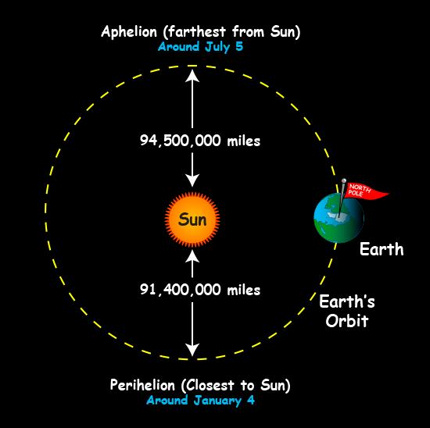
Earth Earth reaches a milestone on July 4, 2020, as it swings out to aphelion, its most distant stage from the sunlight. It takes place at 11:35 UTC. That is 6:35 a.m. Central Daylight Time in the U.S. Translate UTC to your time. Is it warm outdoors for you on your component of Earth suitable now? Or cold out? Earth’s aphelion comes in the midst of Northern Hemisphere summer and Southern Hemisphere wintertime. That should really explain to you that our length from the sun doesn’t result in the seasons. More about that below.
Impression by way of NASA.
The truth is, Earth’s orbit is practically, but not quite, round. So our distance from the sun doesn’t change much. Right now, we’re about 3 million miles (5 million km) farther from the sun than we will be six months from now. That is in distinction to our ordinary length from the sunshine of about 93 million miles (150 million km).
The term aphelion, by the way, comes from the Greek phrases apo meaning absent, off, apart and helios, for the Greek god of the sun. Apart from the sunlight. That’s us, currently.
Hunting for Earth’s specific distance from the sunlight at aphelion? It is 94,507,635 miles (152,095,295 km) . Previous year, on July 4, 2019, the Earth at aphelion was a very small bit farther, at 94,513,221 miles (152,104,285 km).
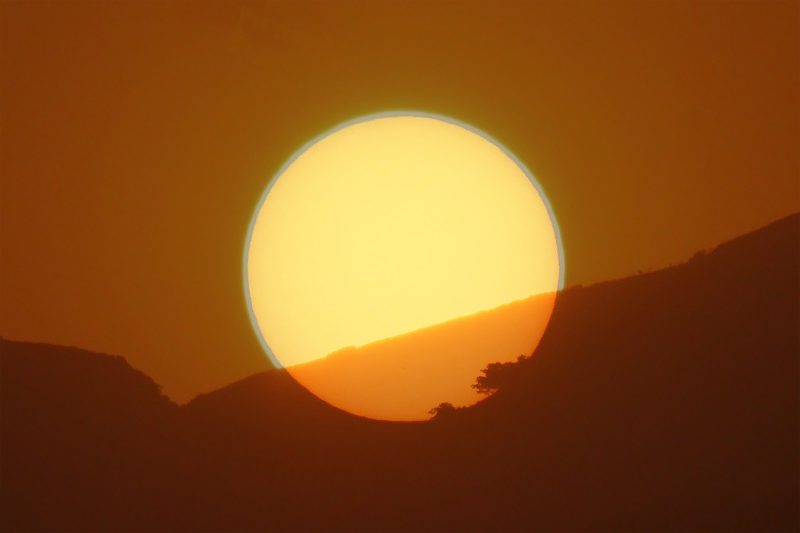
The sunshine at aphelion appears smaller sized in our sky, as shown in this composite image. This picture consists of 2 images, taken just times away from a perihelion (Earth’s closest issue to sunlight) in January 2016, and an aphelion (Earth’s farthest position from solar) in July 2017. The grey rim close to the sunlight (truly the perihelion picture) illustrates that, as found in our sky, the solar is about 3.6% bigger at perihelion than aphelion. This distinction is, of system, as well small to detect with the eye. Peter Lowenstein in Mutare, Zimbabwe – who captured the pictures and developed the composite – wrote: “Although taken 18 months apart, and a couple days from the events thanks to adverse climate circumstances, they exhibit that there is an unmistakable measurement distinction of the sun as seen from Earth when it is closest at perihelion and farthest absent at aphelion.”

This animation exhibits what’s also in the picture earlier mentioned … the dimensions variation of the sunlight amongst Earth’s perihelion (closest issue) and aphelion (farthest position).
Here’s what does trigger the seasons. The seasons are not owing to Earth’s altering length from the sunshine. We’re usually farthest from the sunlight in early July during northern summer season and closest in January in the course of northern winter season.
As a substitute, the seasons end result from Earth’s tilt on its axis. Correct now, it is summertime in the Northern Hemisphere for the reason that the northern part of Earth is tilted most towards the sun.
In the meantime, it is winter in the Southern Hemisphere mainly because the southern portion of Earth is tilted most away from the sun.
Earth’s different distance from the sunshine does impact the size of the seasons. That’s simply because, at our farthest from the sunlight, like now, Earth is traveling most slowly and gradually in its orbit. That will make summer the longest season in the Northern Hemisphere and winter the longest time on the southern 50 percent of the world.
Conversely, wintertime is the shortest season in the Northern Hemisphere, and summertime is the shortest in the Southern Hemisphere, in every single instance by almost 5 times.
Earth at perihelion and aphelion 2001 to 2100
Base line: Planet Earth reaches its most distant stage from the sun for 2020 on July 4. Astronomers connect with this annually issue in Earth’s orbit our aphelion.
EarthSky astronomy kits are ideal for inexperienced persons. Purchase yours these days.
Why isn’t the best climate on the year’s longest working day?
